Understanding Modern Design
Without Losing Your Cool
A clear, stylish breakdown of modern design eras—from Art Nouveau to atomic modern—and why some vintage styles cost more than others.
When It All Feels Like Too Much
If modern furniture has ever felt confusing, you’re not alone. At first glance, everything blurs together—curves, angles, strange materials, unfamiliar names. It can feel like you’re missing a decoder ring that everyone else got for free.
Here’s the good news: there is a system, and it’s far less intimidating than it looks. Once you spend a little time with the right books and walk through antique shops that focus on specific eras, the puzzle pieces start clicking into place. Styles separate. Timelines sharpen. What once felt random begins to feel inevitable.
Learning to See the Differences
Design movements don’t exist in a vacuum. They respond to technology, culture, and how people imagined the future at the time. When you understand that, the visual differences become obvious..
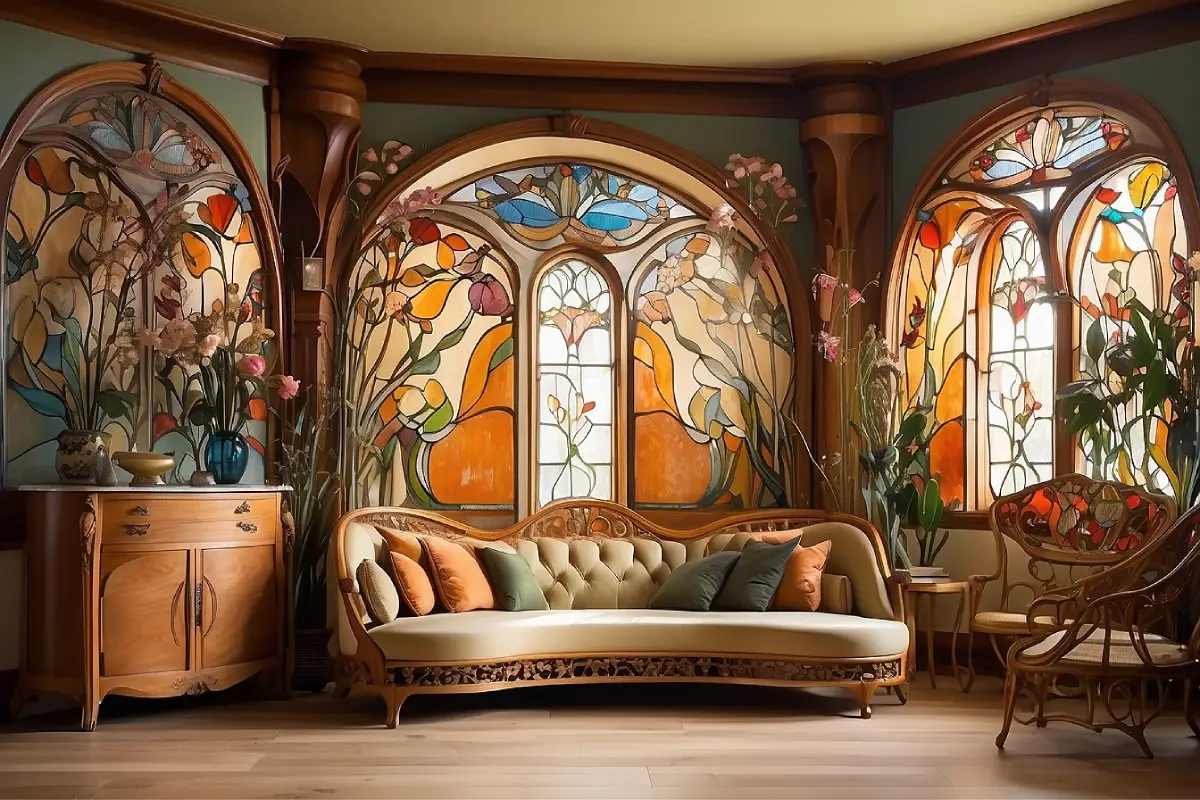
Early 20th-century Art Nouveau, for example, leans heavily into nature. You’ll see flowing lines, organic carvings, and decorative flourishes that feel almost botanical. Furniture from this period looks alive, as if it’s growing rather than being built.
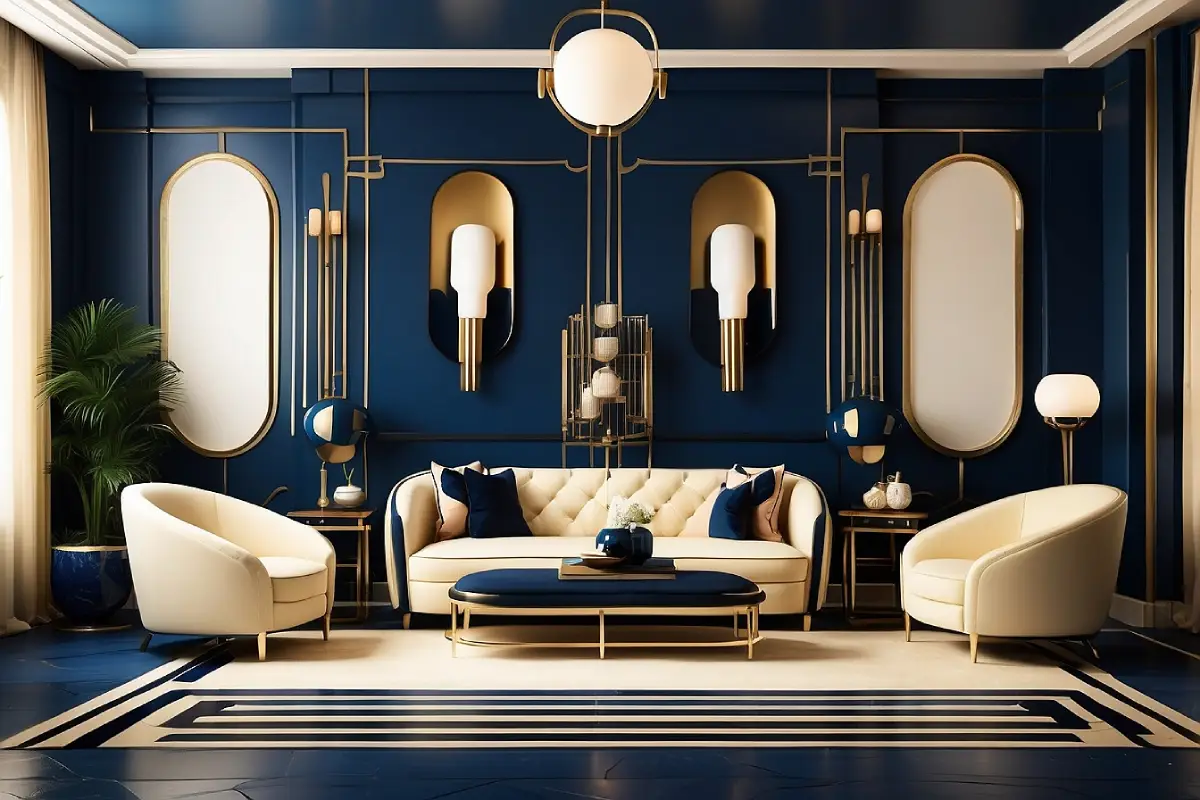
Move into the 1930s and the mood changes dramatically. Art Deco embraces speed, progress, and modern life. Lines become cleaner. Forms streamline. Ornamentation turns graphic—zigzags, sunbursts, stepped profiles. It’s less about flowers and more about machines.
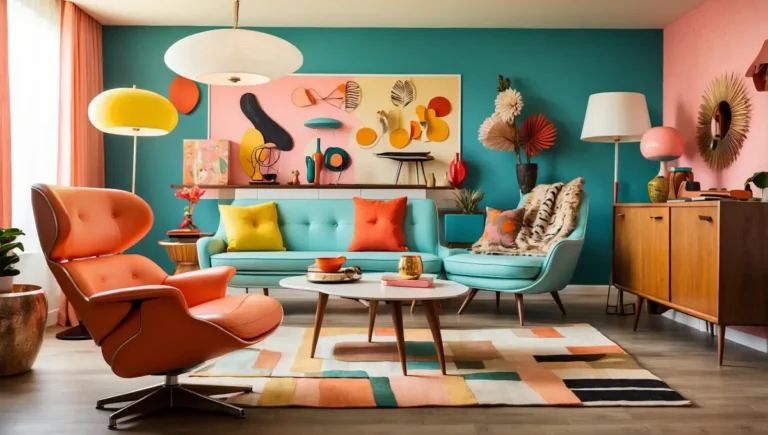
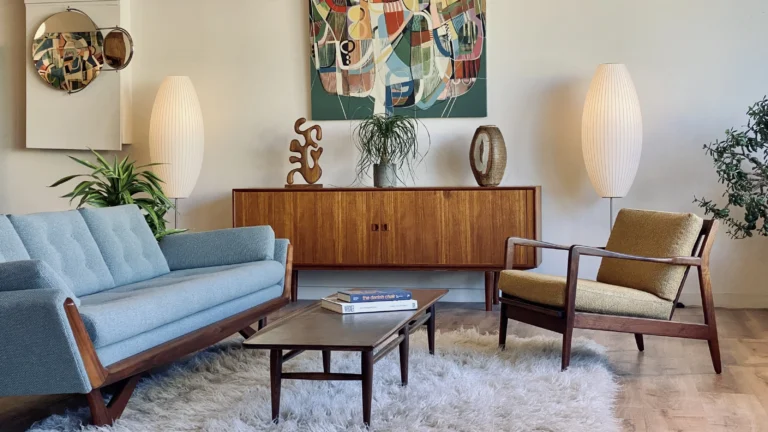
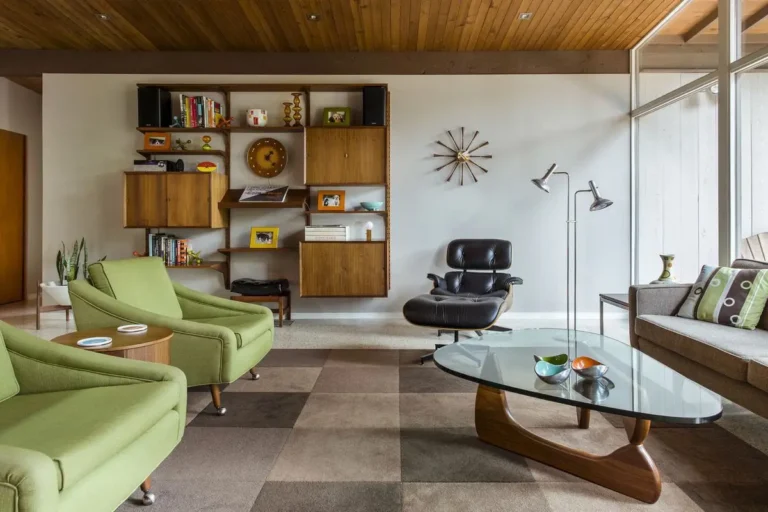
By the late 1940s and early 1950s, design softens again. The biomorphic modernism of the postwar years introduces sculptural curves and human-centered shapes. Furniture begins to look more relaxed, more playful, and more attuned to everyday comfort.
Once you see these shifts, you can’t unsee them.
Materials Tell the Story
One of the easiest ways to place a piece in time is to look at what it’s made of—and how it feels.
In the 1930s, materials like Bakelite dominate. Dark, weighty, and slightly mysterious, these early plastics reflect the seriousness of the era. They feel substantial, almost solemn, and pair naturally with darker woods and dramatic forms.
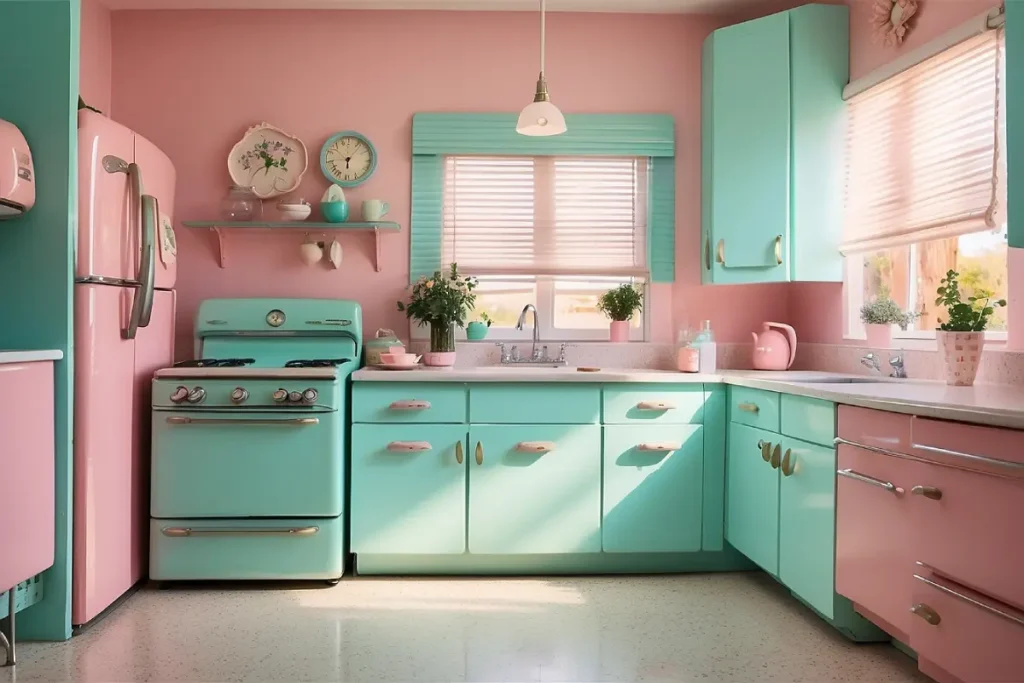
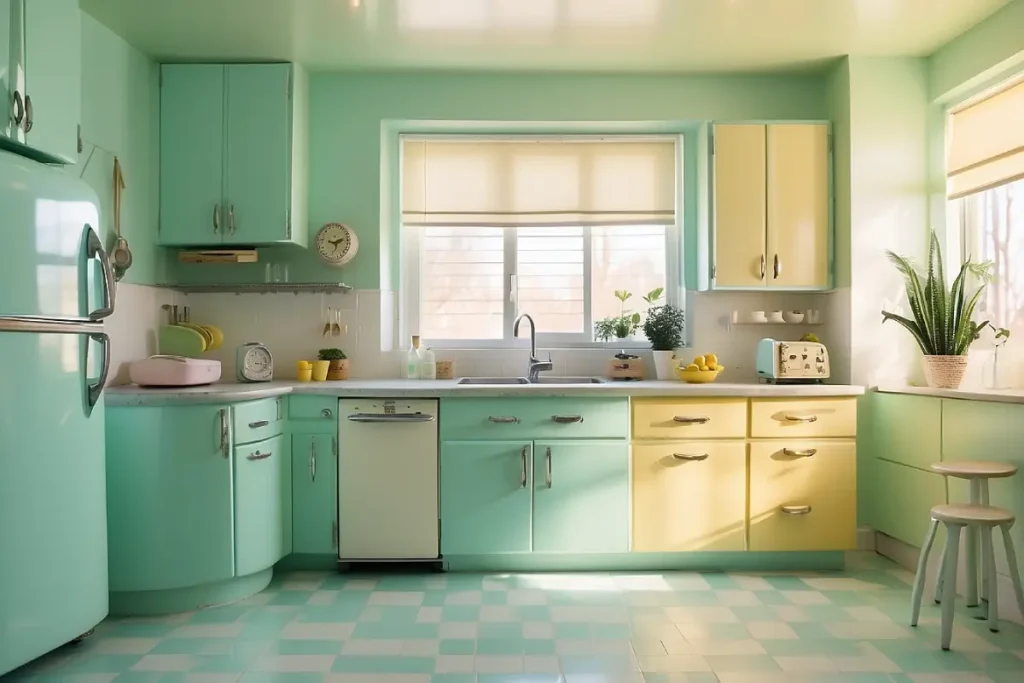
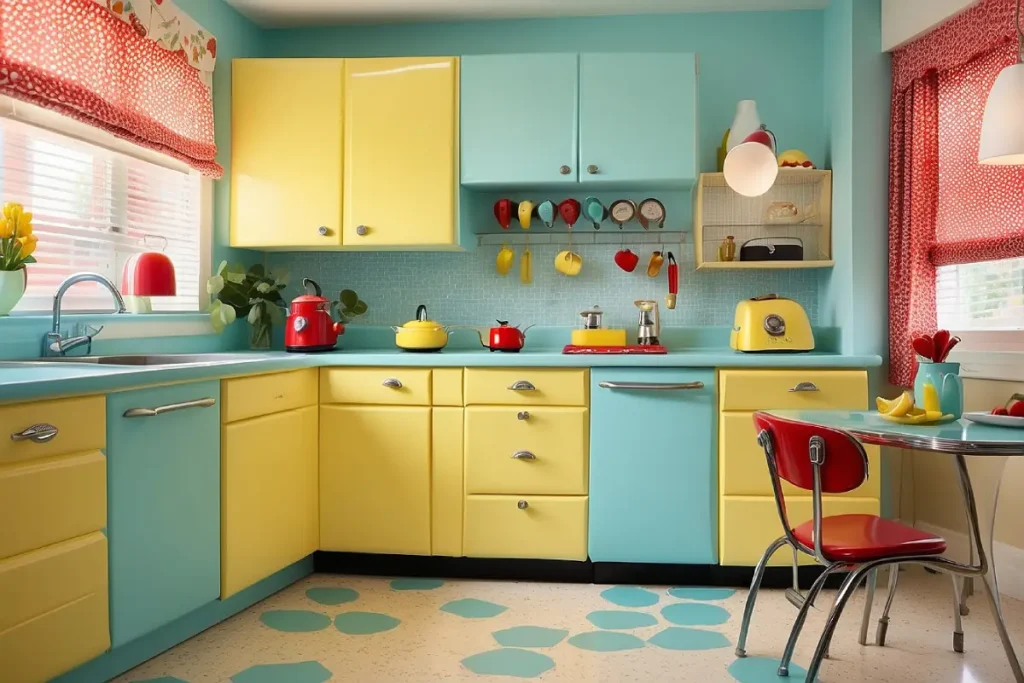
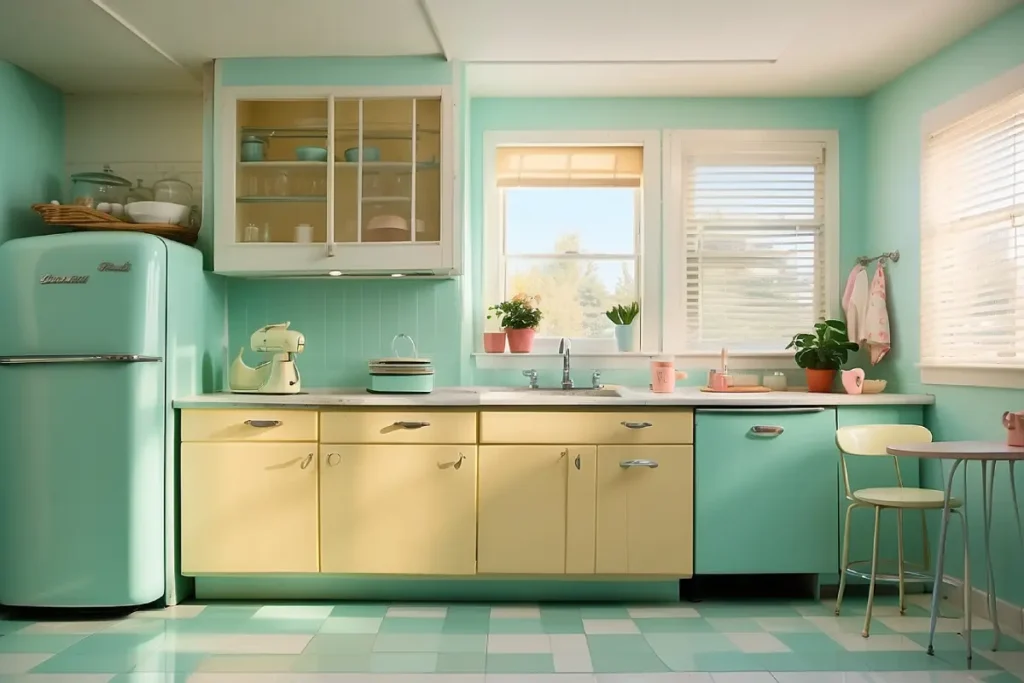
Fast forward a couple of decades and plastics tell a very different story. The postwar years introduce lighter, cheaper, cheerier materials. Pastels come into play. Surfaces feel optimistic and approachable. These are the colors and textures of the Donna Reed era—bright kitchens, suburban optimism, and an eye firmly fixed on the future.

Shapes That Belong to Their Moment
Certain motifs are practically time stamps. Once you recognize them, dating a piece becomes second nature.
Boomerang shapes, atomic starbursts, and playful asymmetry belong almost exclusively to the 1950s and early 1960s. They reflect fascination with science, space, and motion—an era intoxicated with possibility.
By contrast, the bold geometric abstractions of the 1930s celebrate industry itself. These forms champion precision, repetition, and strength. They don’t flirt or wink; they assert. When you see furniture that feels architectural and heroic, you’re usually looking at something rooted in the machine age.

Why Some Styles Cost So Much More
As your taste develops, you’ll probably find yourself gravitating toward a particular era. That’s natural. Just know that some periods come with significantly higher price tags.
Art Deco is a prime example. If that’s your passion, it’s wise to prepare yourself—financially and emotionally. Prices for genuine Deco furniture are high, and they’re not coming down anytime soon.
The reason traces back to the late 1970s. That’s when baby boomers began entering their peak earning years and turned their attention to collecting antiques. At the time, Art Deco was the most accessible major design movement available. Victorian pieces felt heavy and outdated. Mid-century modern hadn’t yet exploded in popularity. Deco sat in the sweet spot.
The Enduring Appeal of Art Deco
Art Deco has a lot going for it. Masculine dark woods. Subtle but confident curves. Graphic zigzags and stylized florals. Imagery that celebrates progress, strength, and ambition. It’s furniture with presence—pieces that feel grounded and authoritative without being fussy.
That appeal hasn’t faded. If anything, it’s grown stronger as modern interiors seek contrast and depth. But continued demand, paired with finite supply, has pushed prices ever higher. Today, Jazz Age furniture often commands serious money, especially when condition and provenance are strong.
Knowing this upfront helps you shop smarter—and with clearer expectations.
Perspective Is the Real Shortcut
The fastest way to make sense of modern furniture isn’t memorization. It’s exposure. Books give you the framework, but walking through specialized antique stores teaches you how pieces feel in real life.
Over time, your instincts sharpen. You’ll notice when a curve feels too early, when a material feels out of place, when a motif belongs to a different decade entirely. The confusion fades, replaced by confidence.
Modern design isn’t a mystery. It’s a language. Once you learn the grammar, the conversation becomes easy—and far more enjoyable.