Retro Room on a Budget
What makes a retro space truly satisfying isn’t how closely it follows a trend or how much it cost. It’s the knowledge that each piece earned its place.
The Hunt Is Half the Fun
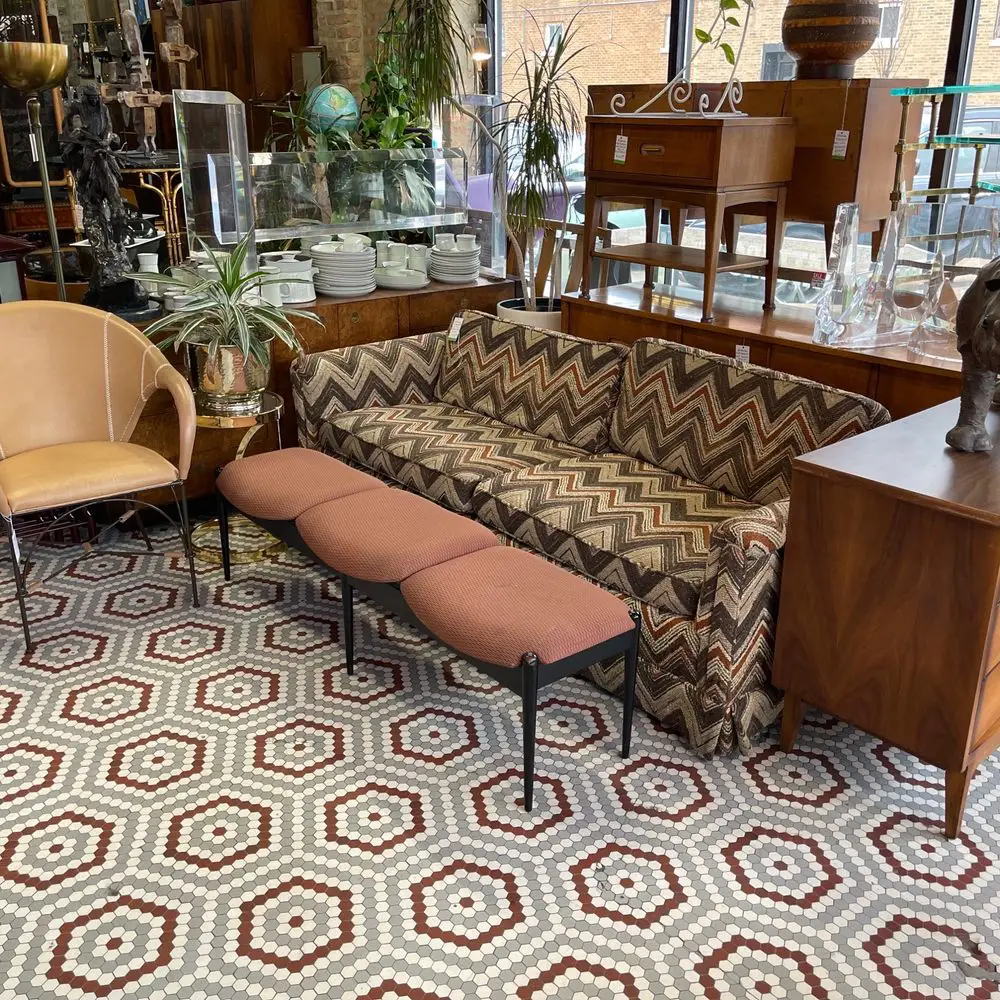
You’ll notice pretty quickly that collecting retro furniture isn’t really about shopping. It’s about hunting. The thrill doesn’t come from pristine showrooms or carefully styled vignettes—it comes from the unexpected. Thrift stores, flea markets, estate sales, and garage sales all offer the same promise: somewhere between the chipped mugs and tired sofas, something special is waiting.
This is where retro collecting shines. You’re not following trends or chasing labels. You’re training your eye. You learn to spot good lines through bad lighting, to see past scratches and water rings, to imagine what a piece could be rather than what it is at the moment. Some days you strike out completely. Other days, lightning hits.
Twenty Bucks and a Little Faith
Every collector has a moment that seals the deal, the one that turns casual browsing into a lifelong habit. Maybe it’s a Heywood Wakefield side table, half-forgotten and underpriced. The maple finish has dulled to a grayish-brown haze. There’s a few battle scars and zero glamour under the fluorescent lights. Still—you recognize it immediately.
It’s twenty dollars. That alone is enough to make your pulse jump.
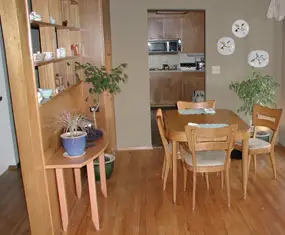
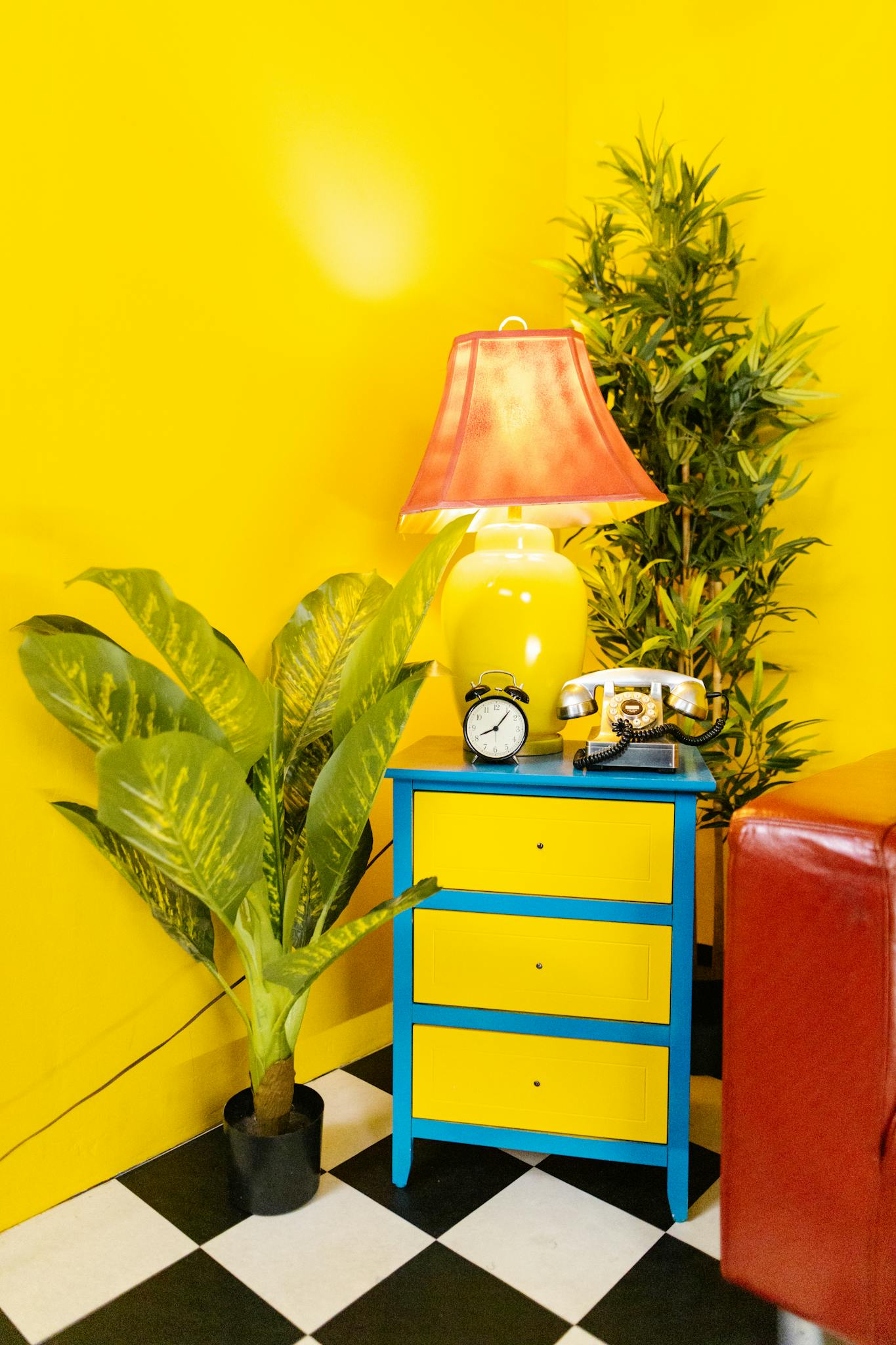
You don’t see damage; you see form. Clean lines. Perfect proportions. That unmistakable mid-century confidence. One month later—after sanding, careful refinishing, and a respectable amount of elbow grease—that humble side table becomes the perfect place to rest a martini. Not bad for a piece that nearly got passed over.
Beauty Beneath the Damage
Retro furniture doesn’t pretend to be flawless. In fact, its charm often lies in the opposite. Scuffs, faded finishes, and minor warps are simply evidence that the piece has lived a life. When you bring something like that home, you’re not erasing its past—you’re extending it.
Many of the most loved pieces in a collection arrive this way: neglected, beaten-up, tucked into the back corner of a bargain store. They require patience and vision. But once restored—or even just stabilized—they carry a warmth that brand-new furniture rarely achieves.
You’ll find yourself drawn to these pieces again and again. Not despite their imperfections, but because of them.
The Bond You Didn’t Expect
There’s a quiet intimacy to restoring furniture yourself. As you strip old finish, smooth rough edges, and coax the grain back to life, something unexpected happens: a bond forms. The piece stops being an object and starts feeling like a collaboration.
You remember the stubborn spot that wouldn’t sand evenly. You remember the moment the wood finally revealed its natural glow. That connection lingers long after the project is done. When someone admires the piece and asks where you got it, your answer carries a little pride.
Getting It Right Without Getting Fancy
Refinishing doesn’t have to be intimidating. You don’t need a fully stocked workshop or decades of experience. A solid book on furniture refinishing will cover the basics, and a conversation with someone who knows their way around wood can clear up most concerns.
Many vintage side tables, end tables, and case goods are surprisingly forgiving. The key is knowing when to restore fully and when to simply clean, repair, and respect the original character. Not every scratch needs to disappear. Sometimes the goal isn’t perfection—it’s honesty.

Style on a Shoestring
One of the best-kept secrets of retro design is how affordable it can be if you’re willing to invest time instead of money. You don’t need a lot of clams to build a great room. You need patience, a good eye, and the willingness to do things the right way.
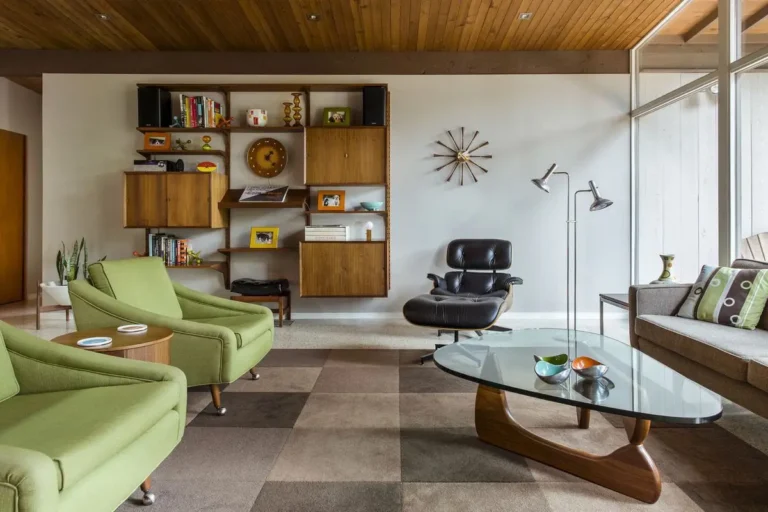
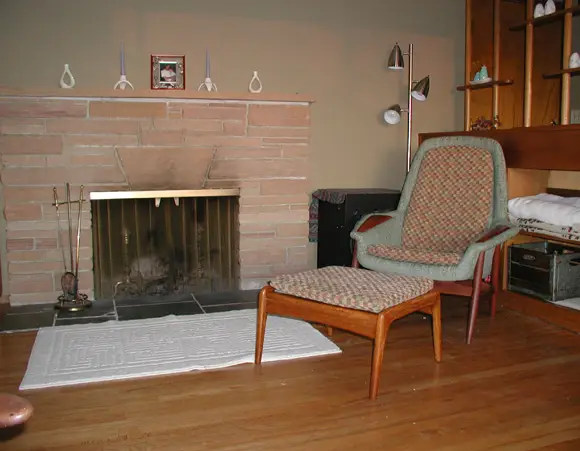
As your collection grows, you’ll start to notice how pieces naturally complement each other. A restored side table finds its place next to a low-profile chair. A rescued lamp suddenly makes sense once it has the right neighbor. The room begins to feel intentional, even though it came together slowly.
When Brown Was Beautiful (Again)
Colors once dismissed as dated have a way of circling back with new relevance. Warm browns, honeyed woods, soft grays—these tones defined decades of mid-century design, and they still hold their own when treated with care. Sand them back, refresh the finish, and let the material speak.
You’ll notice that classic retro furniture relies more on shape than flash. Tapered legs. Subtle curves. Balanced proportions. Even muted colors feel confident when the design is right. A Heywood Wakefield piece doesn’t need to shout—it simply stands there, quietly assured.
A Room That Knows How to Relax
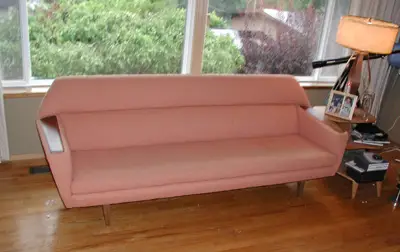
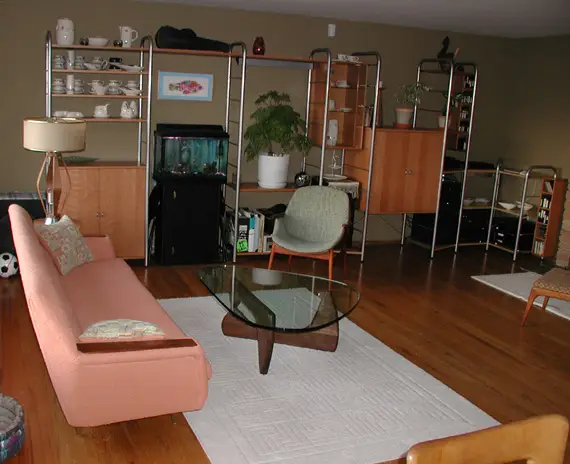
As your space comes together, something shifts. The room stops feeling like a project and starts feeling like a place you want to be. You stretch out your dogs. You rest your glimmer and your noggin. This is a living room built for a swanky cat—comfortable, stylish, and unpretentious.
It doesn’t take much to enjoy it. A few well-chosen pieces. Good light. Maybe Sinatra on the hi-fi, just low enough to hum along. A Manhattan mixed just right. The phone off the hook.
Every finish you revived, every joint you tightened, every table you rescued from obscurity contributes to the whole.
The room reflects your taste, your patience, and your willingness to see potential where others didn’t. It didn’t happen overnight—and that’s exactly why it works.